Here are the skills participants can obtain from participating with Night Walkers:
Scientific Theory Skills
Hypothesis: A clear, testable statement with an expectation. A great resource can be found here and a video about choosing variables here.
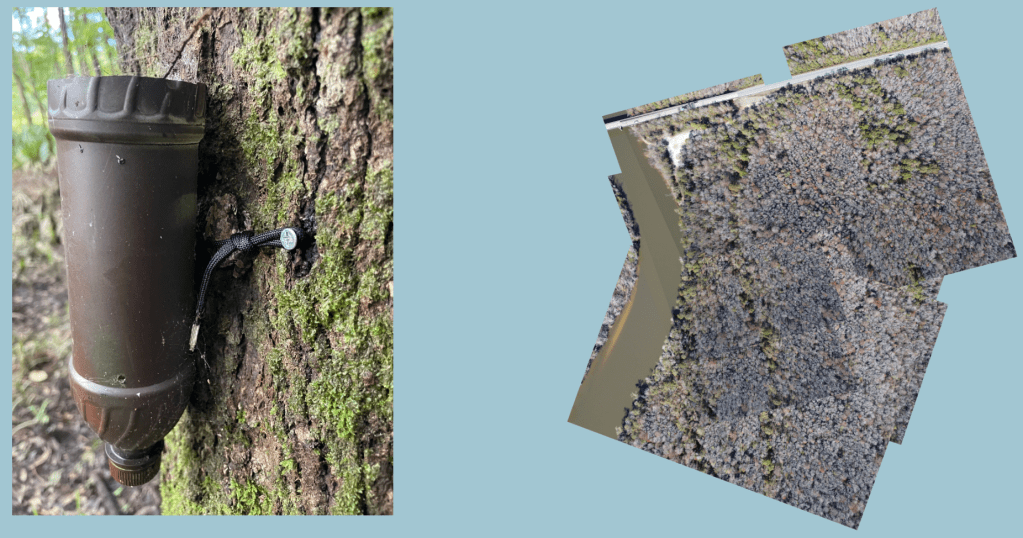
* An example of one we are testing: Bird-voiced Treefrogs utilize frog tubes (see left photo below) attached to Oak trees more than Cypress trees during summer months due to differences in bark texture.
Null Hypothesis: Predicts there is no relationship between the experimental groups.
* For our example: Presence of frogs in tubes will be the same on both types of trees.
Confounding Variables: Hidden factors that might actually explain the difference you’re testing for. There is usually A LOT to think about here…
* For our example: Presence of water under trees, diameter of trees, height of trees, direction of sunlight on tubes, height of tubes on trees, plant community surrounding trees, distance from road, distance from river (see right photo below of drone imagery of our field site), etc.
Video Explanation:
Fieldwork Skills
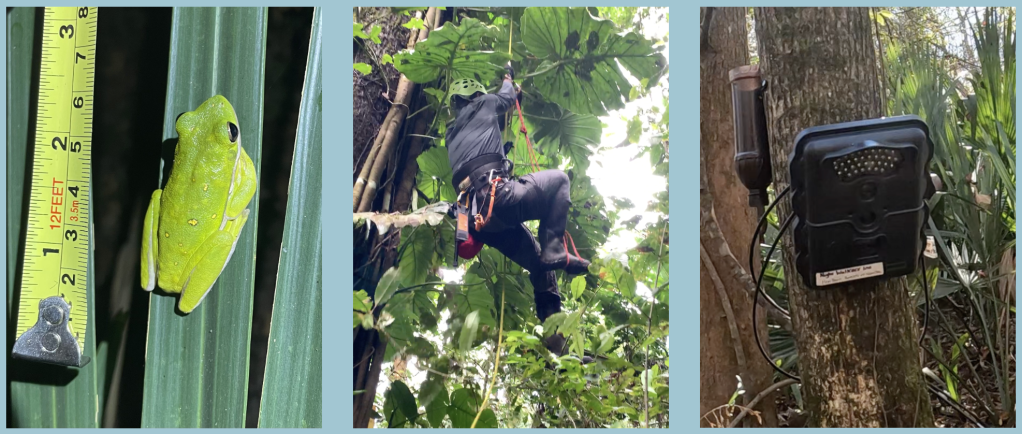
Frog Morphology: We collect data from the frogs we see, including length (see photo below left), position of frog on plant, and abnormalities.
Tree Climbing: Learn how to ascend trees into the canopy to gather data. We primarily use single-rope technique (SRT) for this (see photo below center).
Plant ID and Measurement: What species are in our study sites and the coverage (physical area) they occupy can tell us about the quality of habitat.
Frog Calls: Determining the species from calls alone by both being there and from recording devices. A video explaining how we record sounds remotely can be found here.
Data Collection: How to sample our study sites (for example, transects vs timed samplings), input data, and setup devices. A video explaining how we construct homemade frog tubes can be found here.
Camera Traps: Techniques for placing camera traps on trees to determine what animals come to our study sites when we are not there (see photo below right). See some of our favorite pics here.
Data Analysis Skills
Acoustic Monitoring: Listen to recordings of sample sites to determine frog calls. This can tell us about their activity patterns. See how we conduct this research here.
Environmental Data: Monitor trends, such as river gauge levels, weather events, traffic from road, etc. These variables may explain the fieldwork data we collect.
Trail Camera Animal Identification: record what species are seen on trail cameras and determine frequency of sightings per day/week/month. See our photo gallery here and help us review photos for animals by learning more here and reaching out to us! We need all the help we can get!
Email: nightwalkers.nonprofit@gmail.com
 Night Walkers