- Bufonidae
- Ranidae
- Hylidae
- Southern Cricket Frog (Acris gryllus)
- Cope’s Gray Treefrog (Dryophytes chrysoscelis)
- Spring Peeper (Pseudacris crucifer)
- Upland Chorus Frog (Pseudacris feriarum)
- Ornate Chorus Frog (Pseudacris ornata)
- Bird-Voiced Treefrog (Dryophytes avivoca)
- Green Treefrog (Dryophytes cinereus)
- Barking Treefrog (Dryophytes gratiosus)
- Squirrel Treefrog (Dryophytes squirellus)
- Cuban Treefrog (Osteopilus septentrionalis)
- Pine Barrens Treefrog (Dryophytes andersonii)
- Pine Woods Treefrog (Dryophytes femoralis)
- Microhylidae
- Scaphiopodidae
- Eleutherodactylidae
Bufonidae
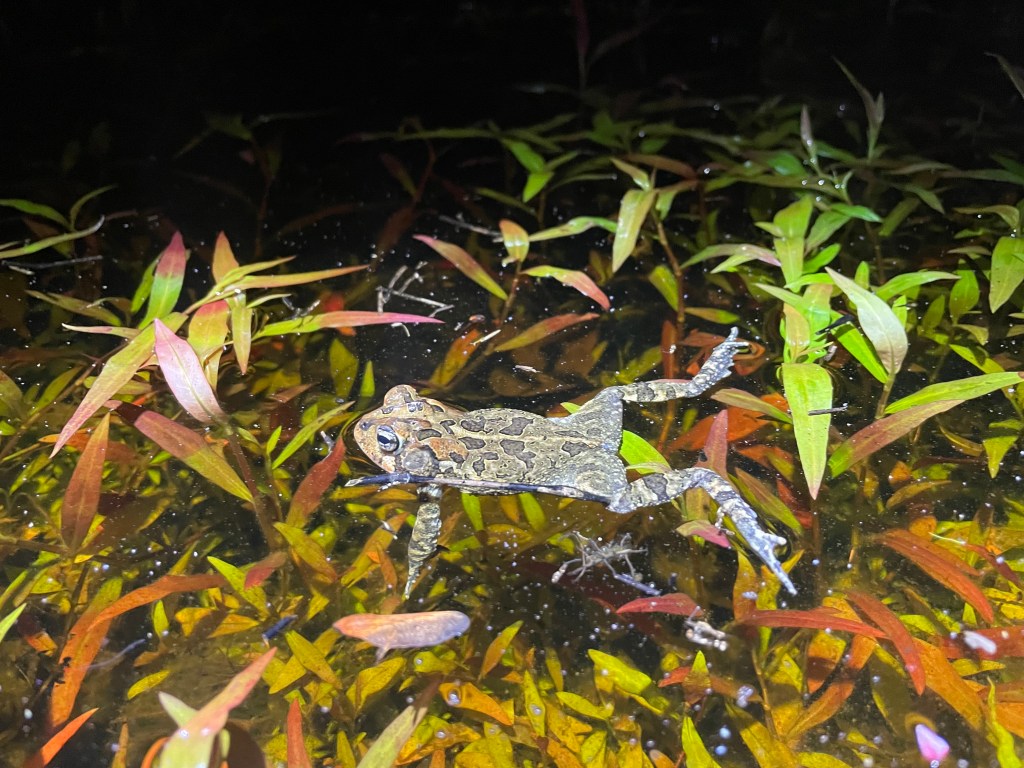
Southern Toad (Anaxyrus terrestris)
Most common toad in all of Florida. They can be identified by the prominent knobs on their cranial crests. Habitat generalists, often found in urban and rural areas. Found in all seasons, but calling is mostly confined to spring time and early summer.
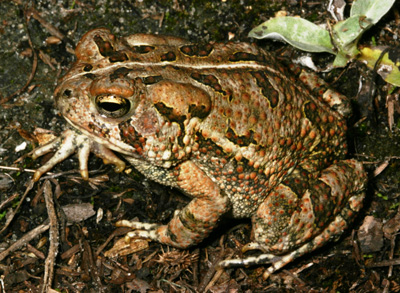
Fowler’s Toad (Anaxyrus fowleri)
Can tell apart from Southern Toads by the absence of large knobs on cranial crests. Their call is also distinct, like a “whaaaaaa.” Pretty uncommon around Pensacola area, but very abundant up into Alabama. I see lots of them in bottomland forests in Tuskegee National Forest outside of Montgomery, AL.
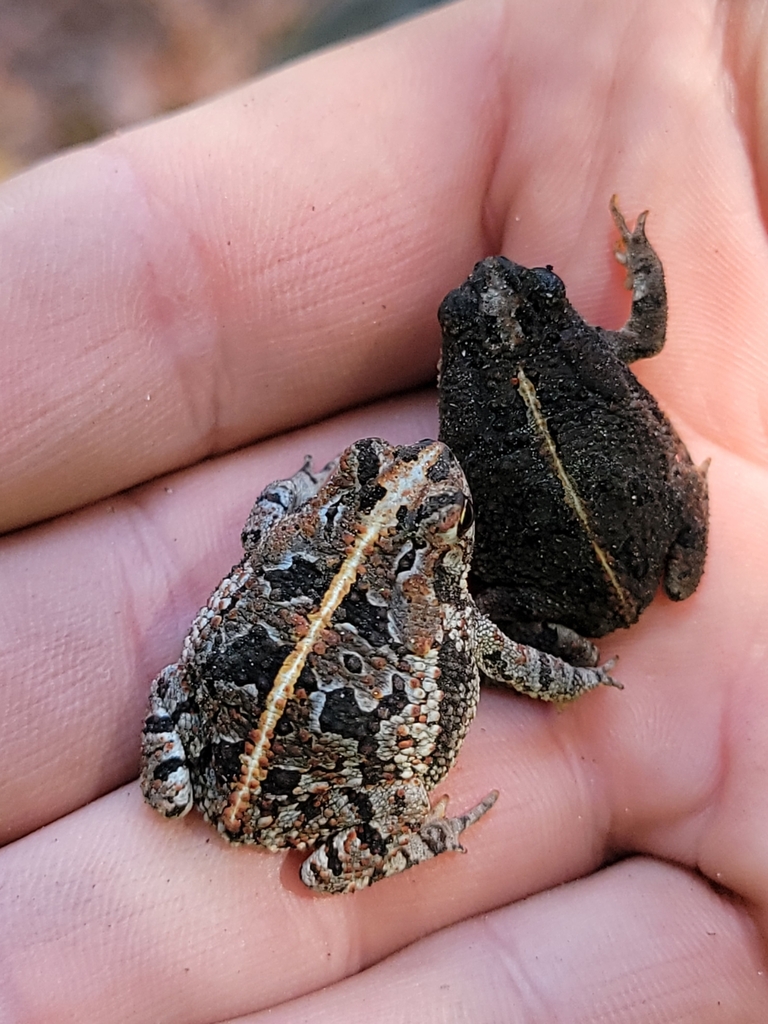
Oak Toad (Anaxyrus quercicus)
Very small toad even as an adult (about 1 inch long). Prominent stripe down the back. Find lots of them in sandy well-drained areas (such as Tarkiln Bayou) and roadside ditches in Point Washington State Forest.
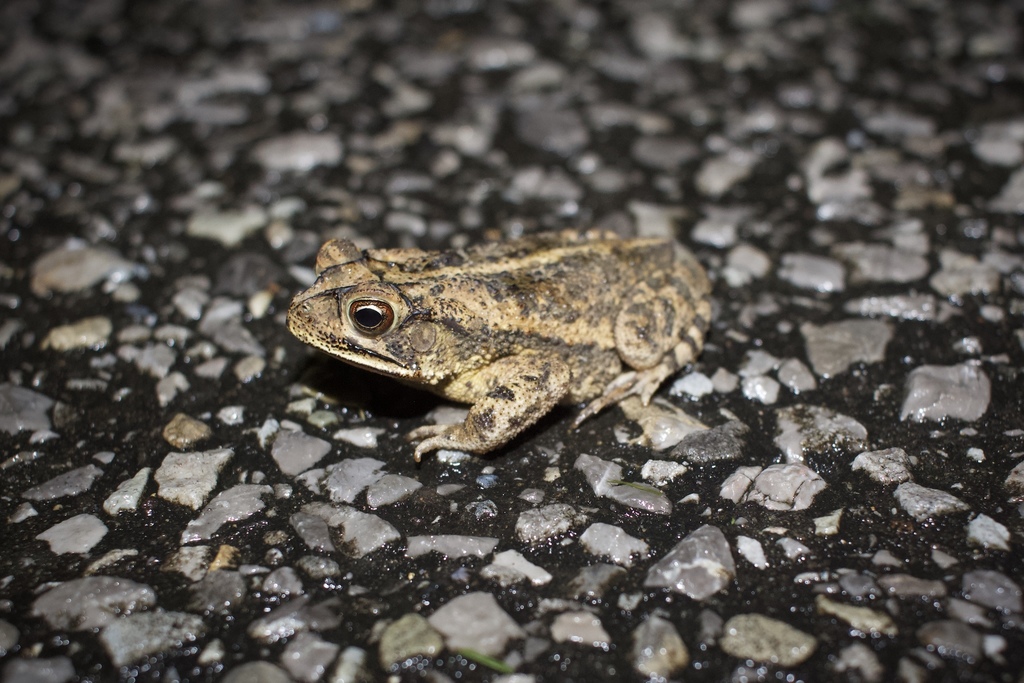
Gulf Coast Toad (Incilius nebulifer)
This species is creeping its way eastward. Decent populations have now been found in Pensacola.
Ranidae
Gopher Frog (Lithobates capito)
Rare frog here in the FL panhandle. They are also very secretive and burrow underground, waiting to emerge for heavy rains. Flatwoods vernal pools are ideal breeding habitat. They also occupy Gopher Tortoise burrows.
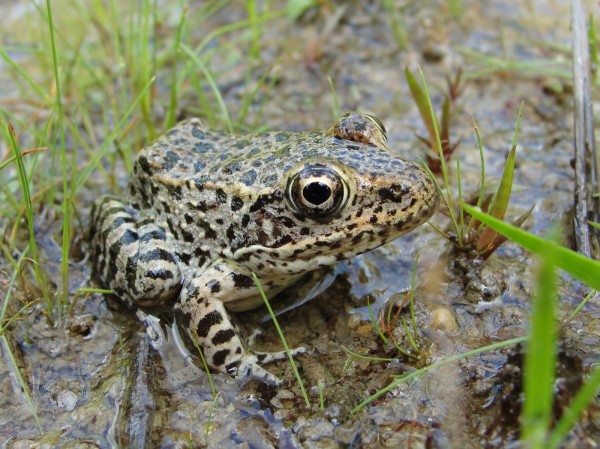
American Bullfrog (Lithobates catesbeianus)
Common large frog. Distinguished from the Pig Frog by less webbing between toes and a longer/pointed snout. They will eat nearly anything that can fit in their mouths and spread frog diseases (such as Ranavirus and Bd).
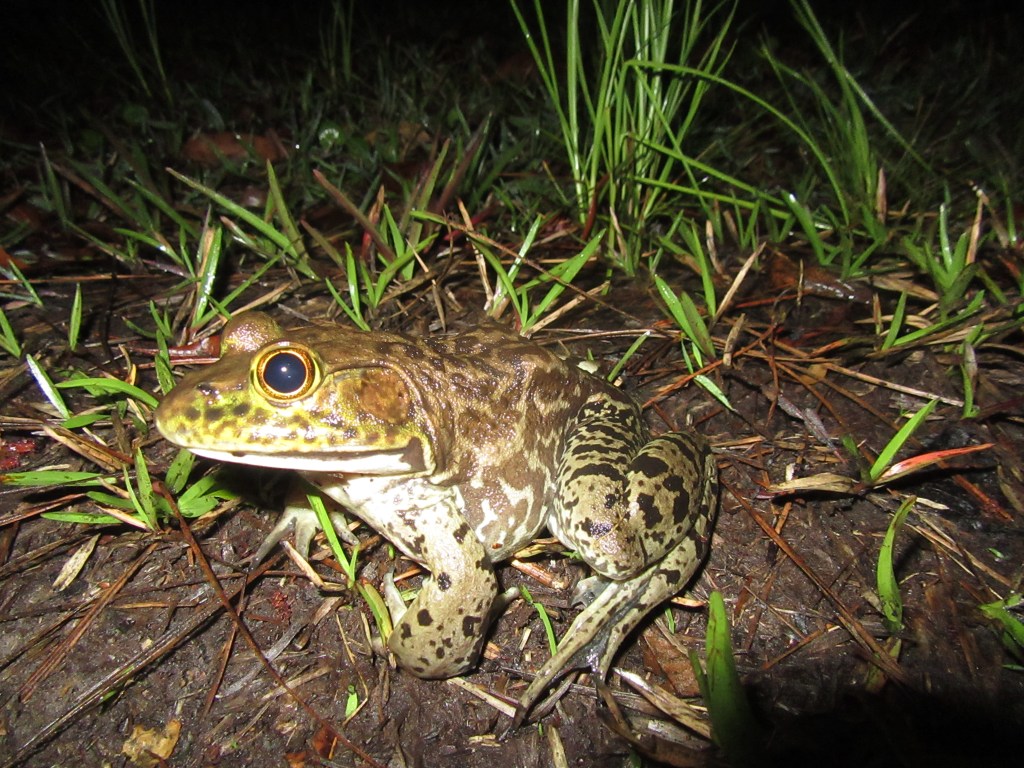
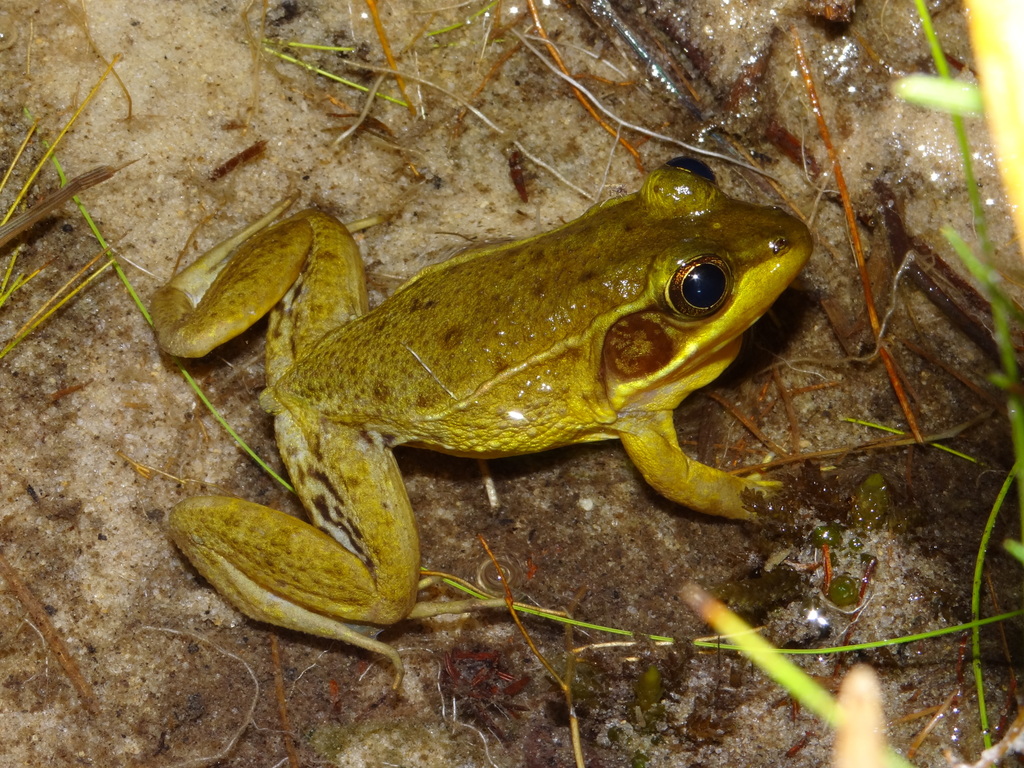
Green Frog (Lithobates clamitans)
Common. Distinct frog if you know what you’re looking for: strong dorsolateral ridge (the protruding line down the side) and a distinct banjo call – but don’t be confused with Barking Treefrog. Can be found year-round, but calling doesn’t begin until spring.
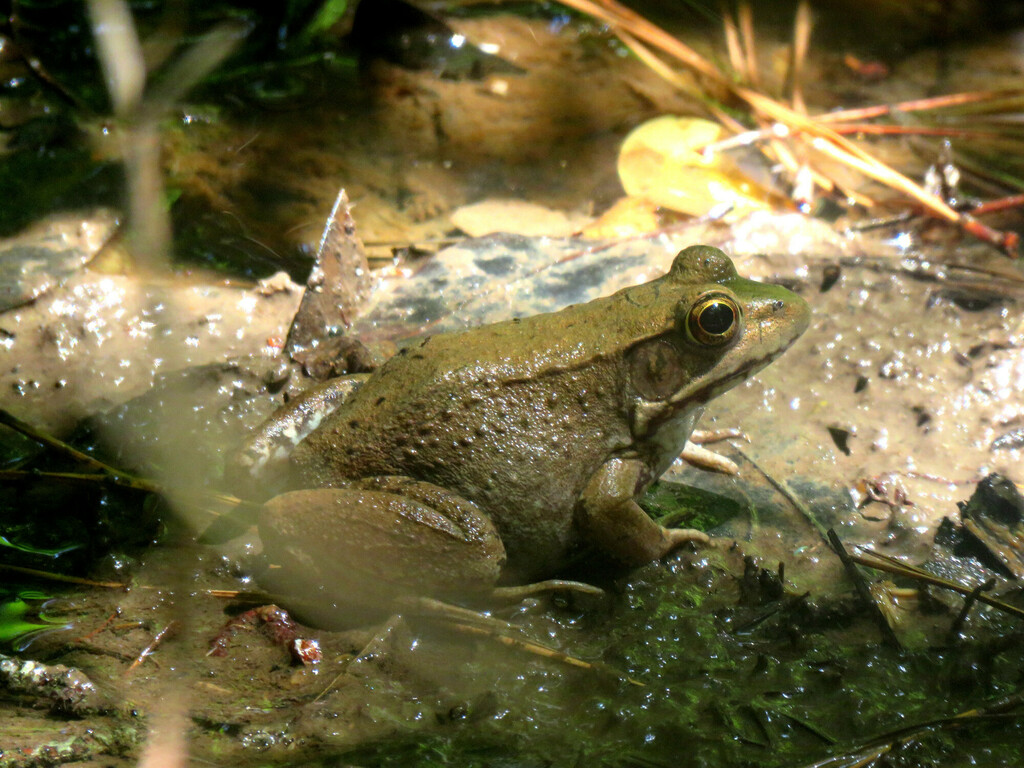
Pig Frog (Lithobates grylio)
A Bullfrog look-alike. The webbing extends to the ends of the hindlimb toes and snout is more shorter/blunt. Their call sounds like pigs grunting.
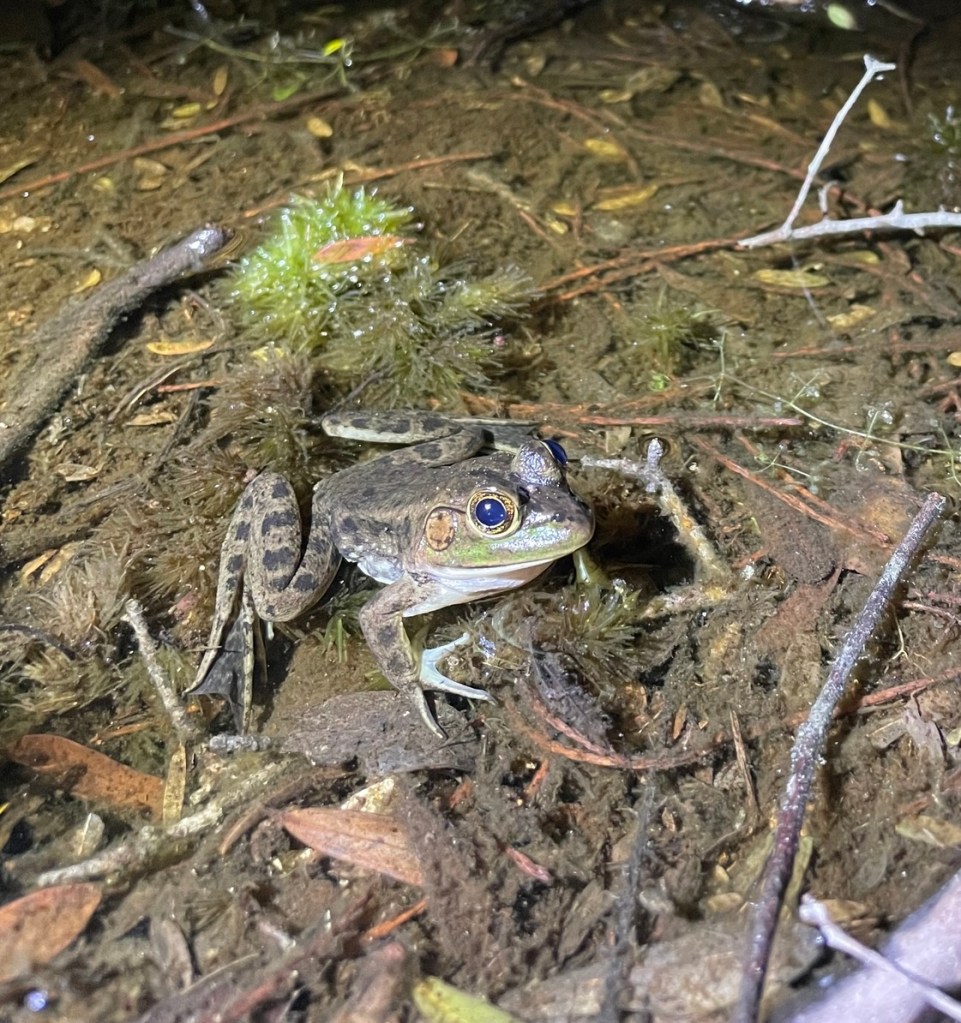
Southern Leopard Frog (Lithobates sphenocephalus)
Extremely common in ponds. Notice the single spot on the tympanum. Calls can be a bit variable.
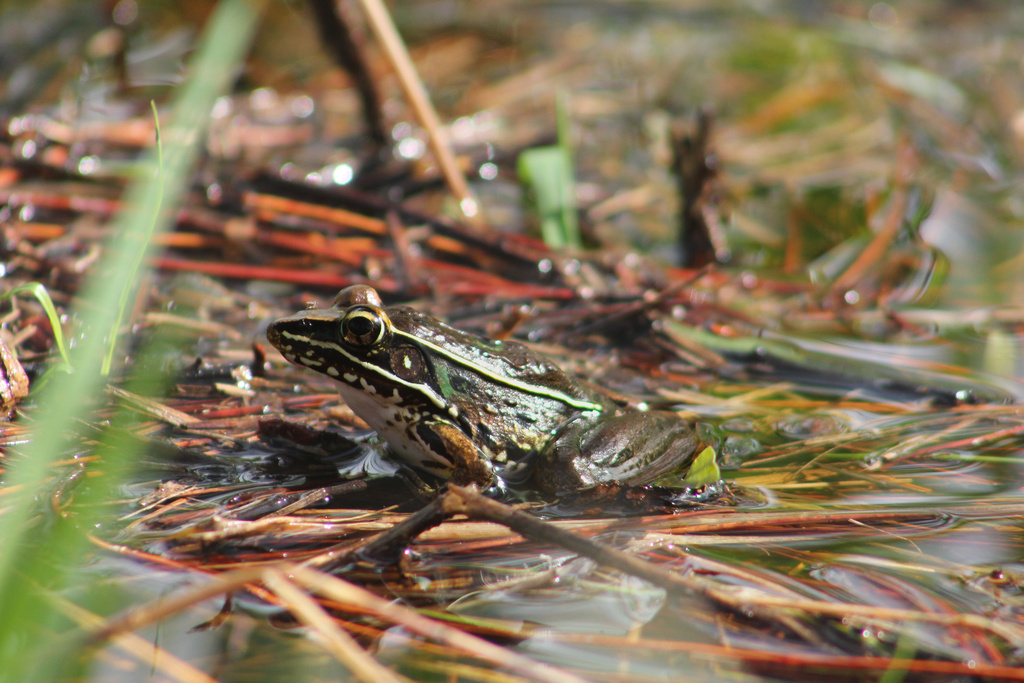
Bog Frog (Lithobates okaloosae)
Rare and endemic only to western panhandle. Looks a lot like the Green Frog, but Bog Frog has less webbing on hindlimb toes and a completely different call than the Green Frog’s banjo noise. Likes slow-moving acidic seeps and blackwater.
Hylidae
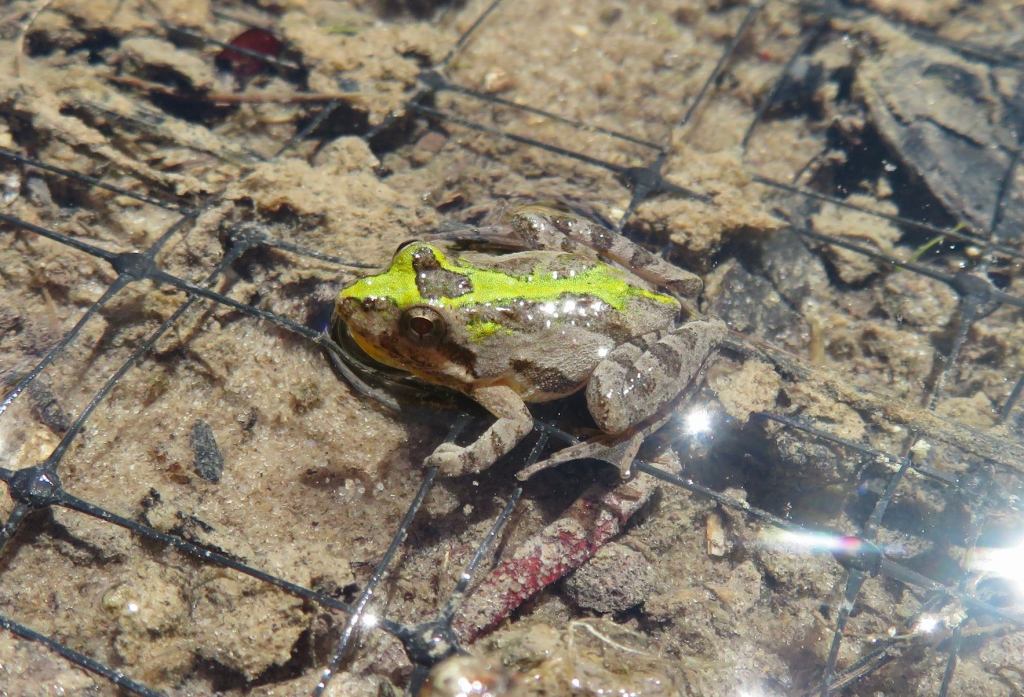
Southern Cricket Frog (Acris gryllus)
Found in ponds, lakes, bogs, and even potholes. Call sounds like marbles hitting against one another. Extremely common frog. I’ve noticed that although they are found by bodies of water, they are reluctant to swim underwater. When spooked into water, they almost always turn right back around towards shore.
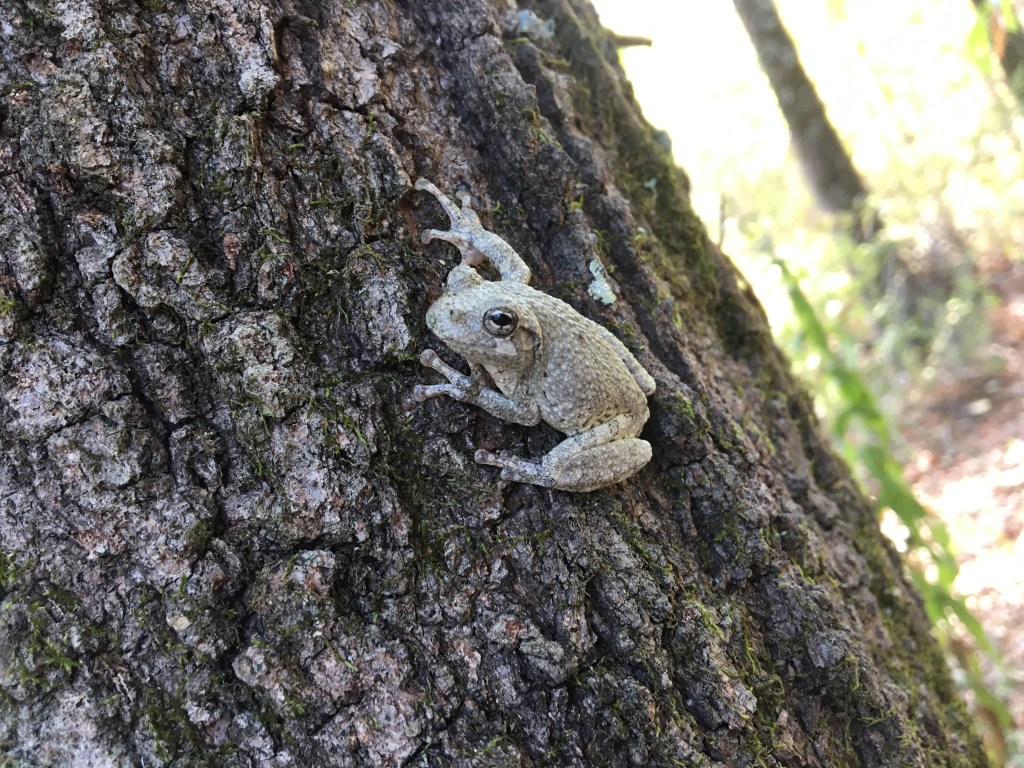
Cope’s Gray Treefrog (Dryophytes chrysoscelis)
A pretty widespread and cold-tolerant treefrog. They will even use swimming pools to breed in. They have extremely variable coloration and patterning, but their inner thighs have bright orange patterning. March is usually when they start calling in Panhandle.
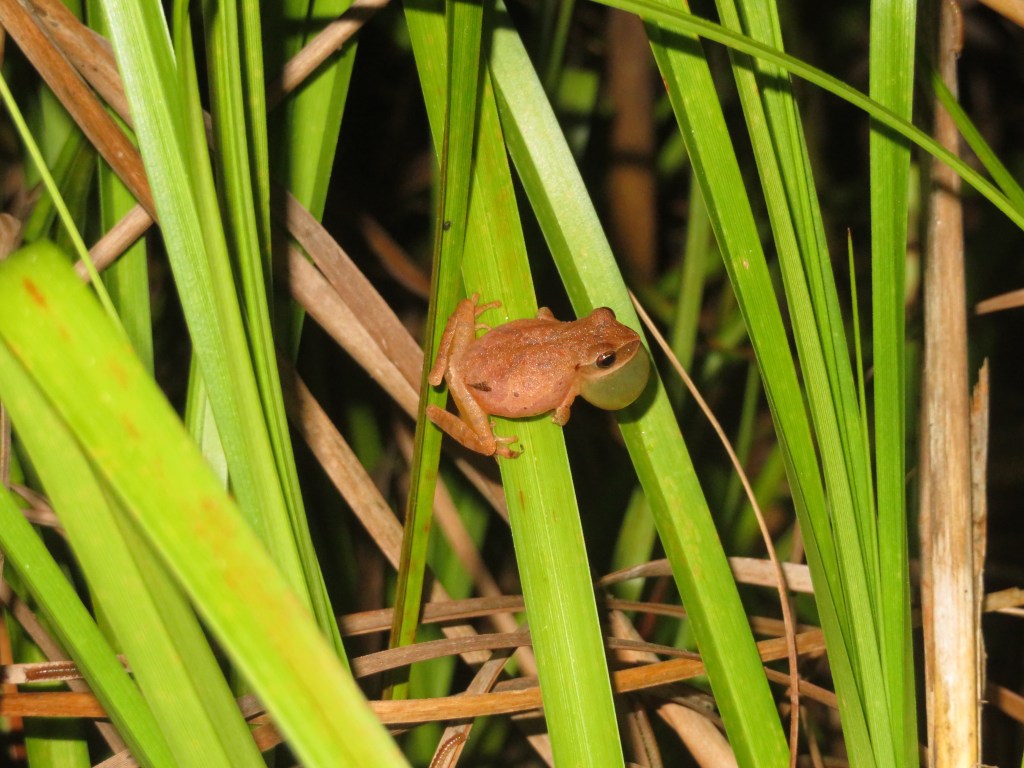
Spring Peeper (Pseudacris crucifer)
One of the first calling species of the new year. Choruses can be nearly deafening, yet seeing them is difficult, as they are small and stop calling when approached. They get the “crucifer” species epithet from a cross shaped marking on their back.
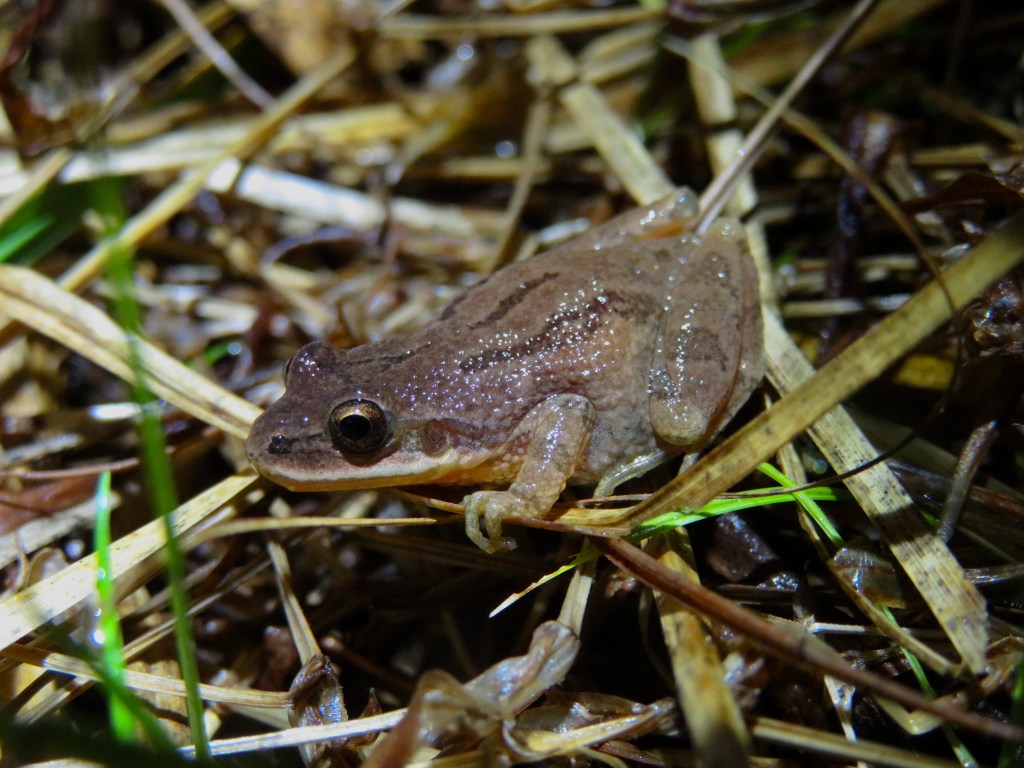
Upland Chorus Frog (Pseudacris feriarum)
Rare in the western panhandle, but very common in northern states (this photo I took outside of Atlanta, GA). Very cold-tolerant species. Call sounds like a finger running over teeth of comb.
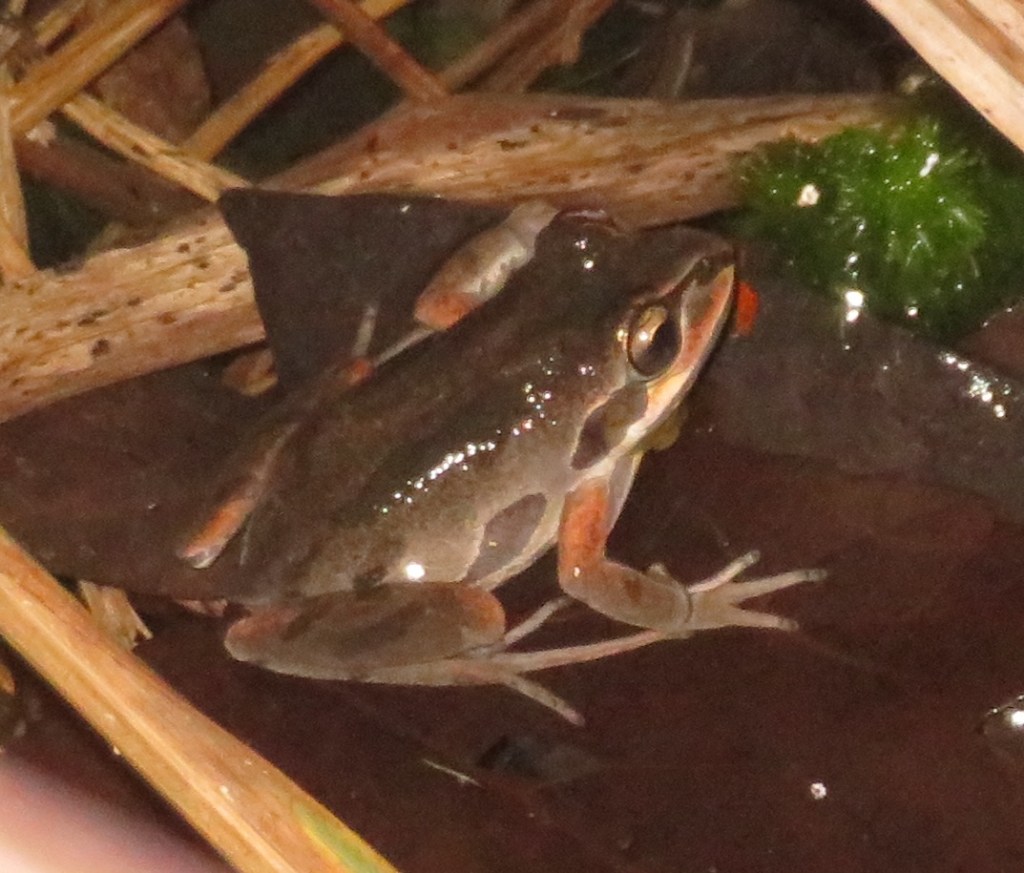
Ornate Chorus Frog (Pseudacris ornata)
Rare species. Can also be green and will spend hot months under ground. Easiest to hear their call at night in pine forests and then locate them in vernal pools.
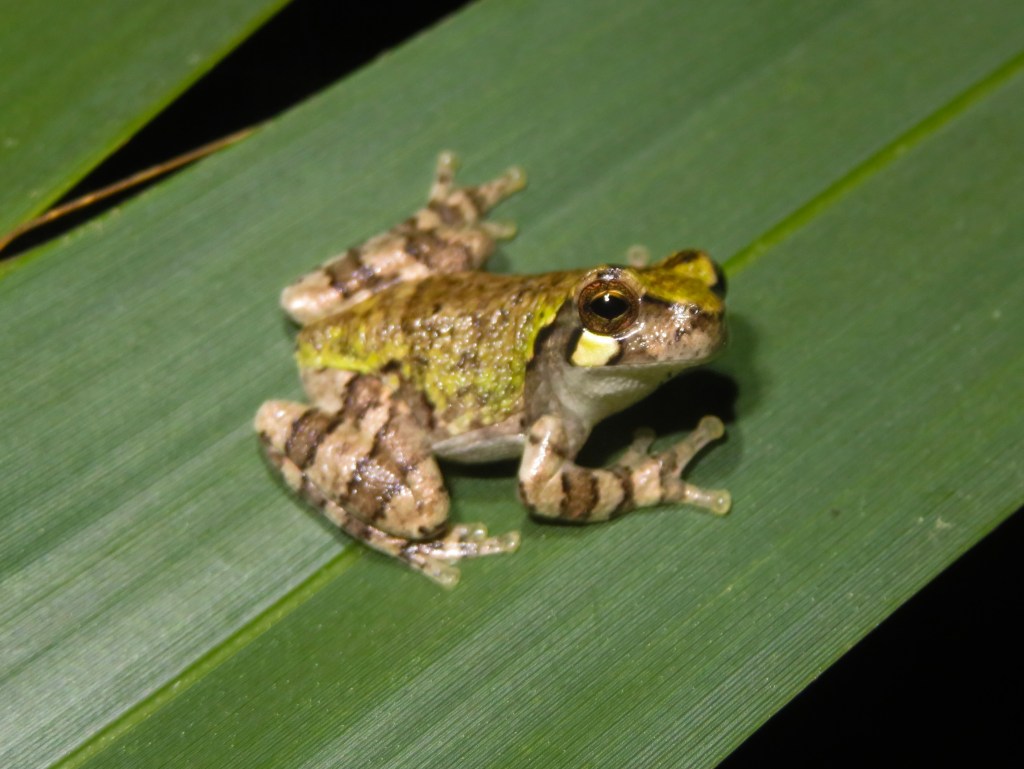
Bird-Voiced Treefrog (Dryophytes avivoca)
Found in alluvial forests directly adjacent to rivers. When you find a population, they can be quite abundant. Hard to tell from Copes Gray Treefrog – have to look at hindlimb (green wash as opposed to bright orange). Check out their beautiful call!
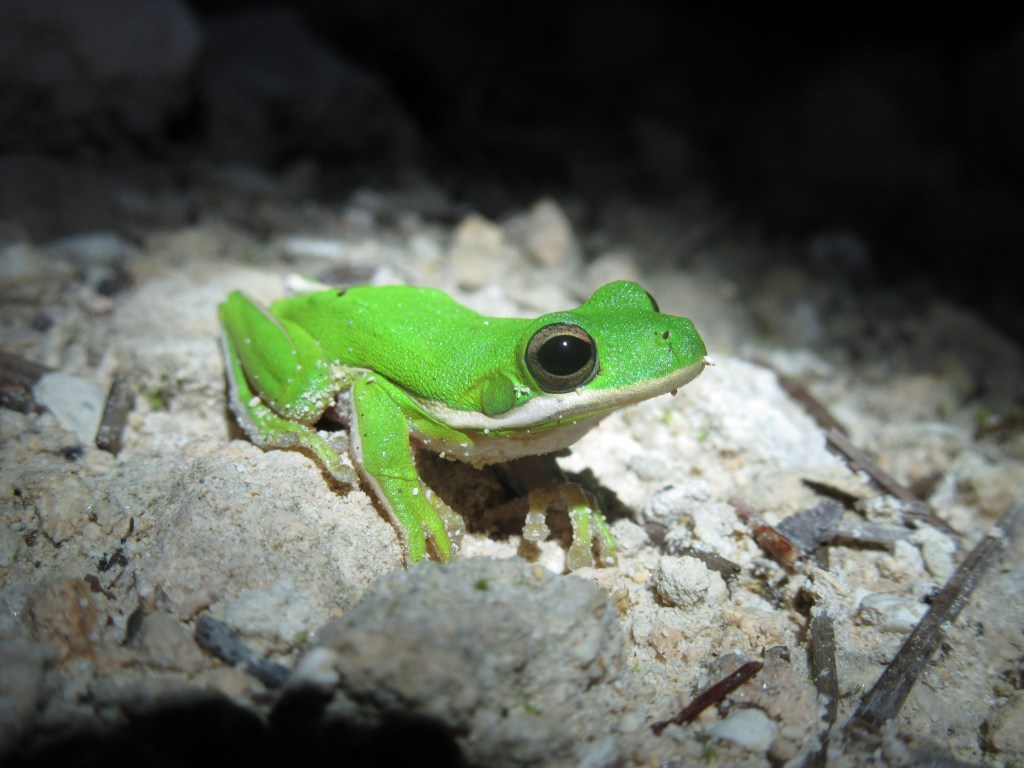
Green Treefrog (Dryophytes cinereus)
A common urban and rural treefrog. Found on sides of houses, open habitats, and many ponds. Looks a lot like the Squirrel Treefrog, but notice the long single prominent white stripe on the side of the body. During the day, they are quite dark and almost dark brown.
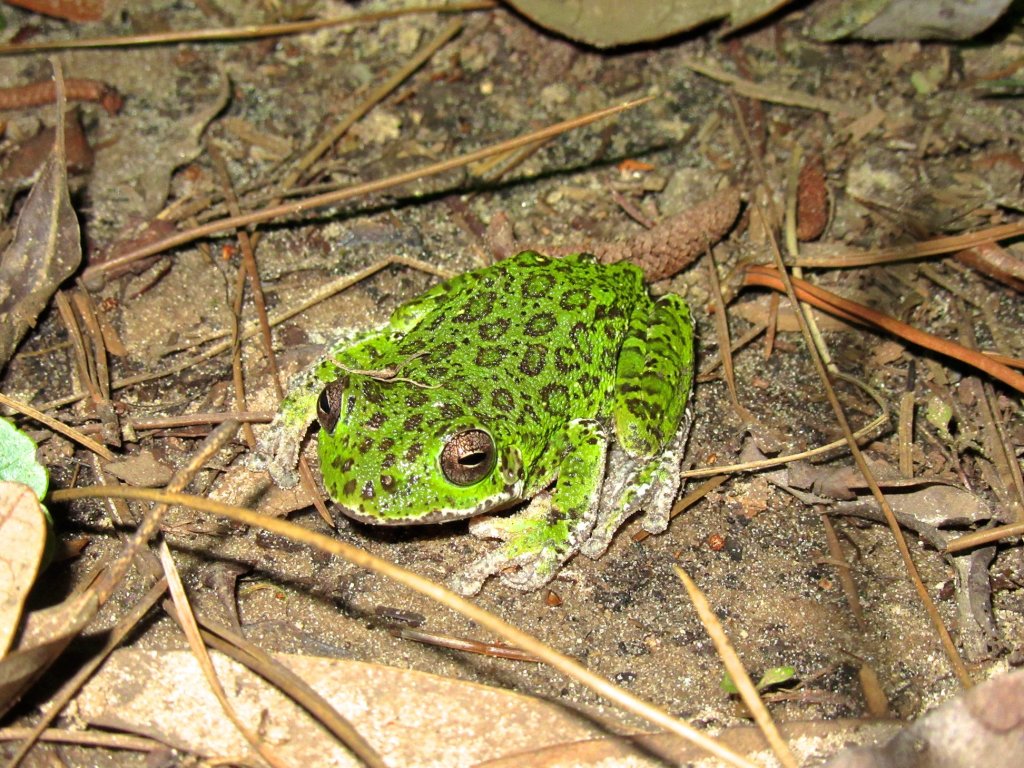
Barking Treefrog (Dryophytes gratiosus)
A large treefrog species with incredible colors on some individuals. Habitat generalists, I have also seen them on the ground and up in trees. Make a hollow “doonk” noise – but not to be confused with Green/Bronze Frogs that make a banjo noise.
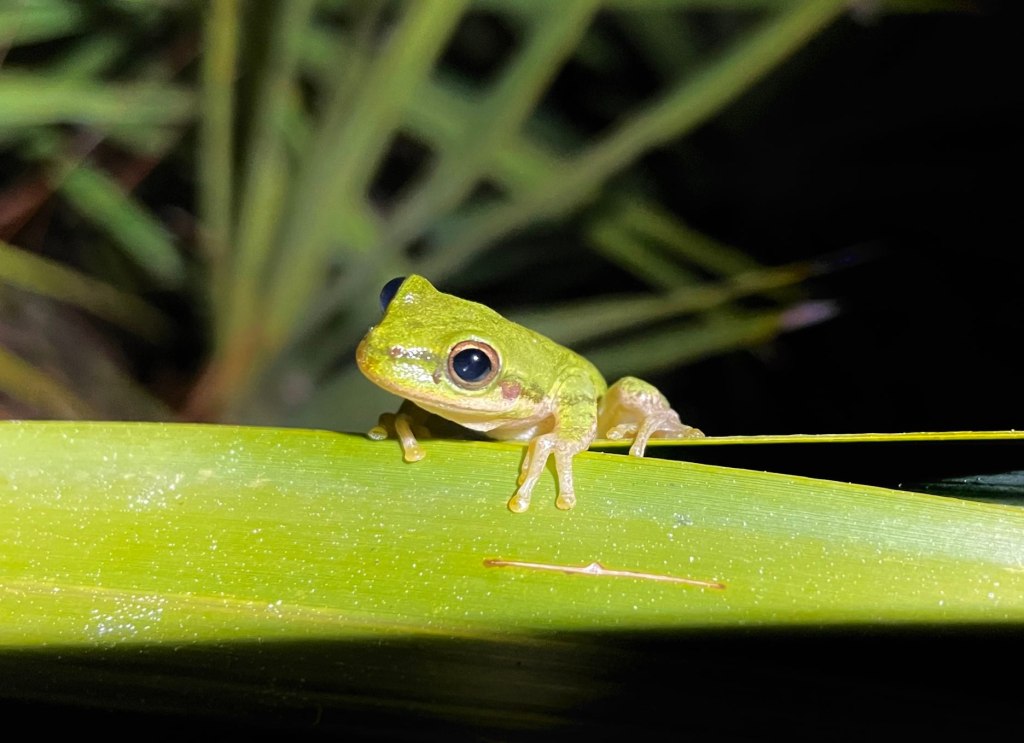
Squirrel Treefrog (Dryophytes squirellus)
This one can be hard to ID. Notice the more faint white stripe on the side of the body past the eye (as opposed to Green Treefrogs that have a bold white line).
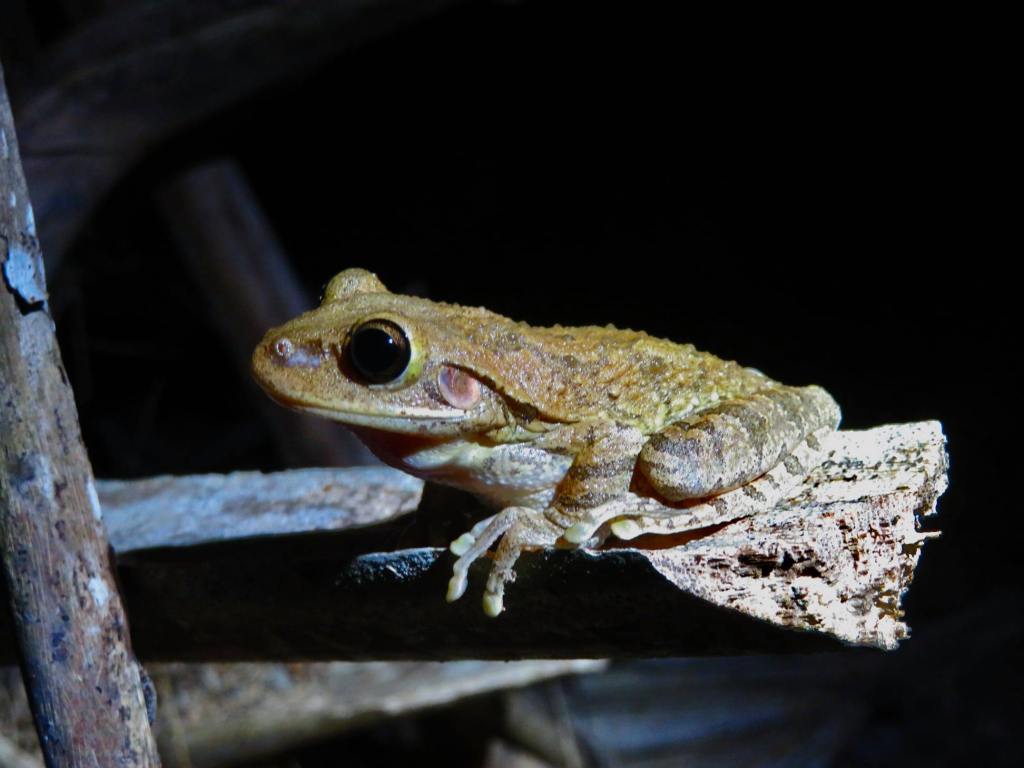
Cuban Treefrog (Osteopilus septentrionalis)
An invasive treefrog likely arriving via plant shipments to the panhandle. This species is toxic to other animals and if handled by people, do not rub eyes afterward – wash hands.
Pine Barrens Treefrog (Dryophytes andersonii)
Very small range around Blackwater River State Forest in hillside seepage bogs. We will be targeting this species in the future.
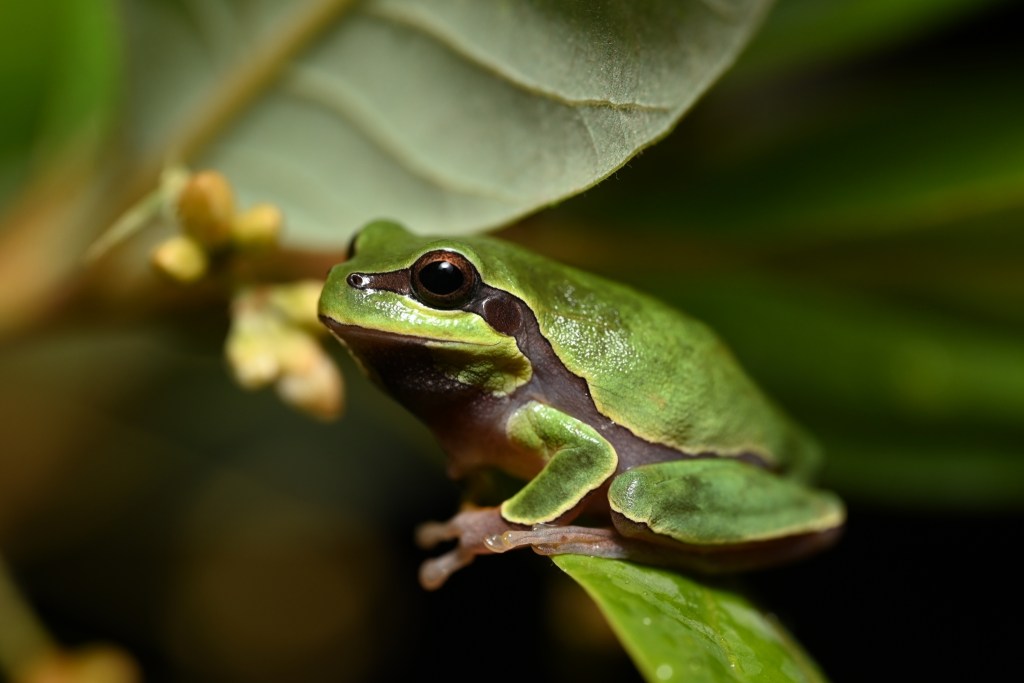
Pine Woods Treefrog (Dryophytes femoralis)
Color and patter very variable. Look at the inner thigh and you will see yellow polkadots. Call is like morse-code, but for some reason I always imagine a violinist playing really fast. I’ve only seen them in the hottest parts of summer in ephemeral ponds.
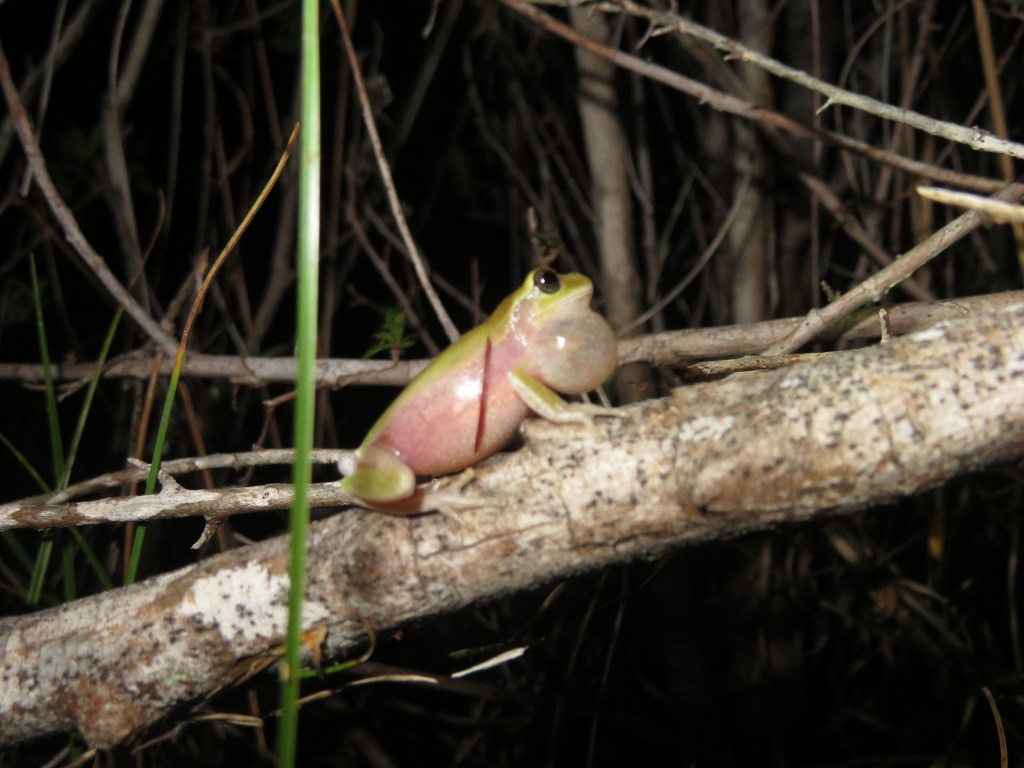
Microhylidae
Eastern Narrow-Mouthed Toad (Gastrophryne carolinensis)
A small species, with adults being about 1 inch long. Common along roadside ditches in early spring and summer. Although they are colloquially called “toads,” they are in fact frogs.

Scaphiopodidae
Eastern Spadefoot (Scaphiopus holbrookii)
Opportunistically uses heavy rains to breed in ephemeral pools. I have seen them out before thunderstorms – when barometric pressure drops.
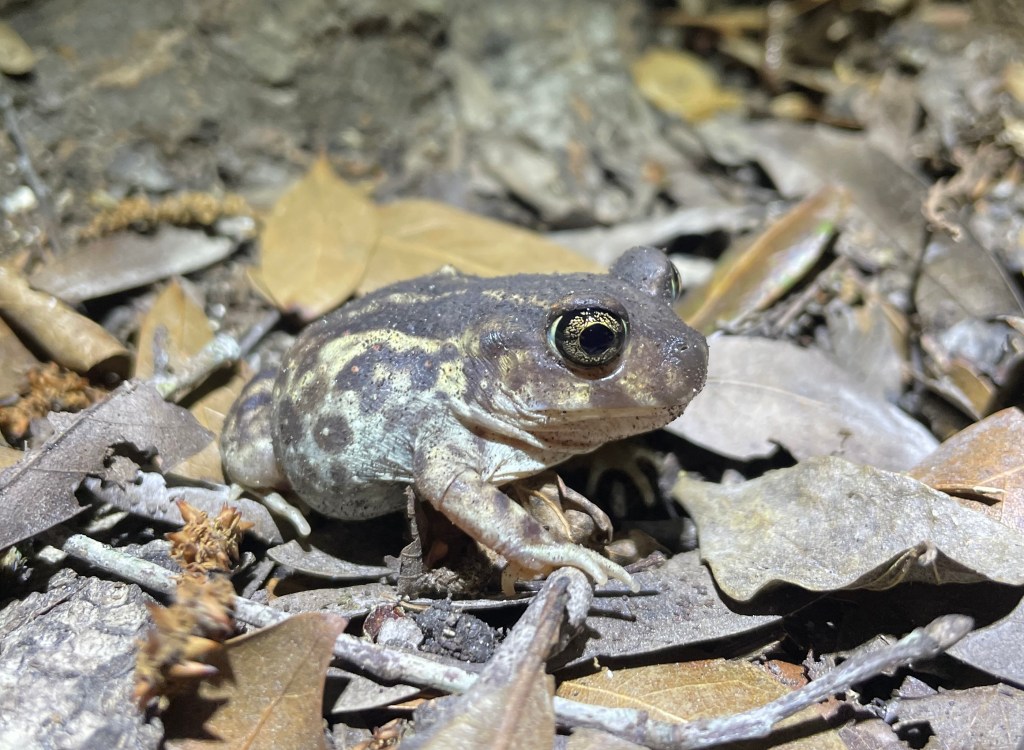
Eleutherodactylidae
Greenhouse Frog (Eleutherodactylus planirostris)
A non-native small frog from the Greater Antilles (Cuba, Cayman Islands, Bahamas). I usually identify them looking at their box-like frame. They are not considered invasive because their ecological impact is negligible to non-existent. They are found in many neighborhoods in Pensacola – including my own house! Found year-round, but calling is on warmer nights.
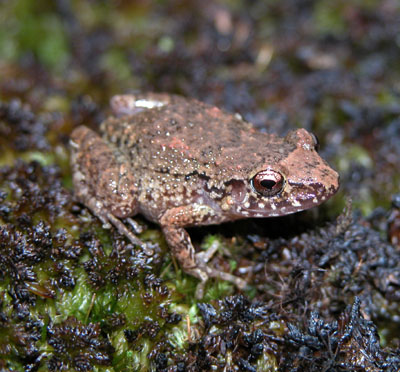
Email: nightwalkers.nonprofit@gmail.com
 Night Walkers